
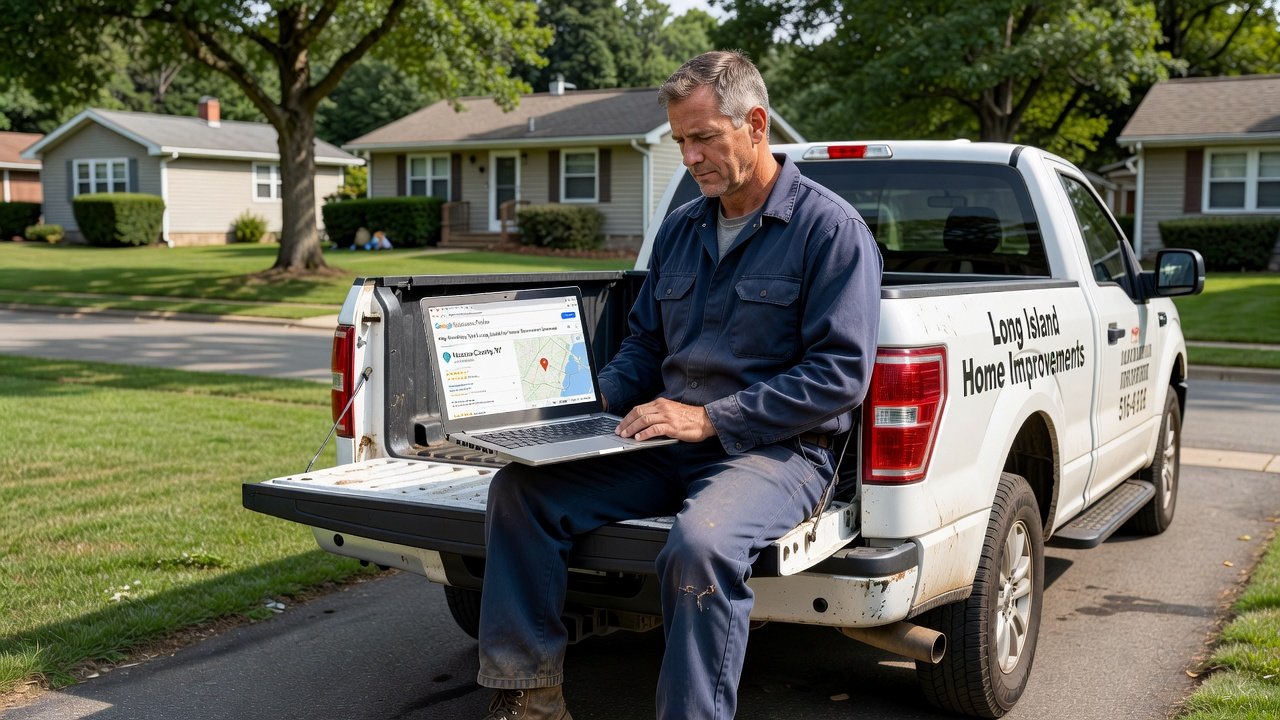
Straightforward SEO for Home Service Businesses 2026: A Cost-Focused Guide for Long Island, NY Residents
SEO for home service businesses 2026 is one of the most searched phrases among HVAC contractors, plumbers, roofers, and landscapers across Long Island right now, and for good reason. The cost of getting it right, or wrong, can determine whether your phone rings in January or goes silent for weeks. Before we walk through what actually drives SEO pricing up or down on Long Island, here’s a quick checklist of what this guide covers: what you’ll spend on local SEO month to month, which services are worth the price, where agencies pad invoices, and how to evaluate proposals without a marketing degree.
At Chauncey Agency, we work with home service businesses from Hempstead to Huntington, from Freeport to Melville, and the questions we hear most often aren’t “what is SEO?” They’re “why does it cost this much?” and “am I getting what I’m paying for?” This guide answers both.
Before you start: know your baseline
Before you spend a dollar on SEO, pull up your Google Business Profile and do a simple search for your service plus your town. Search “plumber in Babylon” or “roof repair Smithtown” and see where you land. If you’re not on the first page or in the map pack, you’re invisible to most buyers. That’s your starting point. Also know your monthly revenue target. SEO is a long-term investment, and if you need calls next week, paid ads will get you there faster. SEO builds the floor under your business over six to twelve months.
Step 1: Understand what local SEO actually costs on Long Island
Monthly retainers for local SEO on Long Island run anywhere from $500 to $4,000 per month depending on competition and scope. HVAC and roofing are the most competitive categories in Nassau and Suffolk counties, so expect to pay on the higher end. A plumber in Mineola competing against three established local companies will need more work than a pool cleaner launching in a less saturated town like Sayville.
One-time setup costs, covering a site audit, Google Business Profile optimization, and citation cleanup, typically run $750 to $2,500. That’s a real number, not a range invented to seem credible. We quote that range regularly to clients in East Meadow and Copiague who are starting from scratch.
What’s not worth paying for: vanity reports, guaranteed ranking promises, and “proprietary AI content” that produces thin pages nobody reads. Those are margin items for the agency, not value items for you.
Step 2: Figure out which services drive your SEO cost up
Several factors push the monthly cost higher. First, geographic spread. If you serve both Nassau and Suffolk counties, you need location-specific pages for each town you target. A roofing company covering Hicksville, Commack, Bay Shore, and Ronkonkoma needs four separate, well-written service-area pages, not one page that lists all four towns in a sentence. Each page takes time and real writing, and that time costs money.
Second, the age and condition of your website. A site built on a slow, outdated theme with no mobile optimization needs technical work before any content investment pays off. Google’s crawlers and your visitor’s experience are both hurt by slow load times. Technical remediation can add $1,000 to $3,000 upfront to any engagement.
Third, review velocity. In competitive Long Island markets, a contractor with 200 reviews at 4.8 stars beats one with 40 reviews at 5.0 stars in most cases. Building a review strategy takes consistent effort and, if outsourced, adds to your monthly cost.
Step 3: Separate what you need from what’s being sold to you
Most home service SEO proposals include a mix of necessary work and upsells. Here’s how to tell them apart. Necessary: Google Business Profile management, local citation building, on-page optimization for your core service pages, and monthly content that targets real local search queries. Optional but sometimes valuable: link building outreach, video optimization, and schema markup. Often unnecessary at the start: social media management bundled into an SEO package, press releases, and “influencer outreach” for a plumbing company.
We’ve reviewed proposals sent to electricians in Valley Stream and landscapers in Commack that included line items for services that simply don’t move the needle for local home service businesses. Ask every agency: “Which of these line items directly affects my Google map ranking?” If they can’t answer that clearly, that’s useful information.
Step 4: Set a realistic timeline tied to real cost
Six months is the minimum window for meaningful SEO results for most Long Island home service businesses. Twelve months is where the returns start to compound. If you’re paying $1,200 per month and nothing measurable has happened by month four, including ranking movement, profile views, or call volume, that warrants a conversation, not a renewal.
A realistic benchmark for a well-optimized HVAC company in a mid-competition Long Island market: visible movement in the local map pack within 60 to 90 days, first-page rankings for longtail local queries within six months, and meaningful call attribution from organic by month nine.
Step 5: Evaluate proposals with cost-per-lead in mind
The cleanest way to evaluate SEO spend is cost-per-lead. If your monthly SEO investment is $1,500 and you’re getting 20 qualified calls per month from organic, that’s $75 per lead. Compare that to Google Local Services Ads, which for HVAC in Nassau County can run $80 to $150 per lead at competitive times of year. SEO that’s working is usually the better long-term value, but it takes time to reach that point.
Track calls. Use a call-tracking number for your website that’s different from the one on your truck wrap. That’s how you know which revenue is coming from SEO and which is coming from other sources. We set this up for a landscaping company in Massapequa last year and within four months they could see that 60 percent of their new client calls were from organic search.
A real situation from Deer Park, Long Island
Marcus runs a family-owned gutter and siding company in Deer Park. He had a decent website but wasn’t ranking for anything useful. His Google Business Profile had 14 reviews and hadn’t been updated in two years. He was spending $800 per month with an SEO company and had no idea what they were actually doing each month. When he came to us, we audited his site and found duplicate service pages, a broken sitemap, and no location-specific content beyond a single “Service Area” paragraph. His agency had been publishing generic blog posts with no local targeting, none of which had earned a visitor’s click from search.
We rebuilt his content structure, cleaned up his profile, and launched a review-generation campaign. Within five months he was ranking in the map pack for “gutter cleaning Deer Park” and two neighboring towns. His monthly cost with us was comparable to what he was paying before, around $1,000 per month, but the work was tied to measurable outcomes each month.
Step 6: Negotiate contracts based on what you can measure
Month-to-month agreements are almost always available from reputable agencies, even if a six-month contract is the default offer. Push for monthly reporting that includes ranking positions, Google Business Profile actions (calls, direction requests, website clicks), and organic traffic trends. If an agency can’t report on those three things monthly, they can’t demonstrate value.
Avoid long contracts with vague deliverables. “We’ll do ongoing SEO work” is not a deliverable. “We’ll publish two location-specific service pages and generate five new citations monthly” is.
Step 7: Know when to switch agencies and when to stay the course
SEO takes time, and the instinct to switch providers at month three when results are slow is often a mistake. But there are legitimate reasons to leave an agency: no communication, no reporting, unexplained drops in your Google Business Profile visibility, or ranking losses tied to poor-quality content they published on your site.
Switching too often also resets momentum. If you’ve been working with an agency for four months and things are trending in the right direction, a small result is still a signal that the work is having an effect. The mistake is cutting before the strategy has had time to compound.
Troubleshooting tip: If your Google Business Profile ranking dropped suddenly and your agency can’t explain why, check whether a competitor recently earned a surge of new reviews, whether your NAP (name, address, phone number) is consistent across the web, and whether Google flagged your listing for any reason. These are the three most common causes of sudden map-pack drops in competitive Long Island markets, and none of them require a new agency. They require a fix.
What to budget in 2026 if you’re starting fresh on Long Island
If you’re a solo contractor or small home service company in Nassau or Suffolk County starting SEO from zero in 2026, a reasonable first-year budget is $8,000 to $15,000 total, covering setup, monthly management, and content. That’s not cheap, but the alternative is either paying $80 to $150 per lead in perpetuity through paid ads or relying entirely on word-of-mouth in a competitive market where your competitors are already ranking.
We’ve helped businesses in Freeport, Huntington Station, and Brentwood build organic search presence that now generates leads every month without ad spend. It took time and a clear strategy, but the economics are real. If you want an honest assessment of where your business stands and what it would cost to move the needle, reach out to our team at chauncey.agency. We work with home service businesses across Long Island and Brooklyn and we’ll tell you plainly what we think before you sign anything.
Frequently Asked Questions & Answers
How much should a Long Island home service business budget for SEO in 2026?
Most home service businesses in Nassau and Suffolk counties should budget between $750 and $2,500 for initial setup and $800 to $2,500 per month for ongoing SEO management, depending on how competitive their service category is. HVAC, roofing, and plumbing are the most competitive and typically require higher investment to see map-pack results. A first-year total budget of $8,000 to $15,000 is realistic for a company starting from scratch.
How long does it take to see SEO results for a home service company on Long Island?
In most Long Island markets, a well-optimized business can expect to see Google Business Profile ranking movement within 60 to 90 days, first-page visibility for specific local search terms within six months, and consistent organic lead flow by month nine to twelve. Markets like Hicksville, Bay Shore, and Commack are competitive enough that shortcuts don’t hold. Steady, documented work over time is what produces durable rankings.
What’s the difference between local SEO and regular SEO for home service businesses?
Local SEO focuses on ranking in geographically specific searches, primarily the Google map pack and “near me” queries, and centers on your Google Business Profile, local citations, and town-specific service pages. Regular SEO typically targets broader, non-geographic keywords and relies heavily on content volume and backlinks. For a plumber in Mineola or a roofer in Sayville, local SEO is almost always the higher priority because that’s how their customers search. The two approaches overlap, but local optimization should come first for any home service business with a defined service area.
Related from Chauncey Agency: Medicaid Home Care In Brooklyn, NY · And Genuinely Care · Lead Generation for Businesses in Brooklyn, NY