Honest Marketing for Medical Practices New York: 2026 Guide for Bronx Residents
Practices across the Bronx are leaving new patient relationships on the table right now, not because their care is lacking, but because the wrong assumptions about marketing for medical practices New York are quietly running the show. We talk to physicians, care managers, and office administrators across Morrisania, Parkchester, and Riverdale every week, and the same misunderstandings come up in nearly every conversation. The stakes are real: a solo primary care office in Fordham Road can lose ground to a larger group practice in Westchester simply because that group understood what medical marketing actually involves and did the work. This piece is our attempt to set the record straight, plainly and honestly, before another month of growth gets left behind.
What Medical Marketing in the Bronx Actually Looks Like Day to Day
Dr. Amara runs a family medicine practice on Boston Road in the Soundview section of the Bronx. She trained for over a decade, built a trusted patient base through word of mouth, and assumed that was enough. When a new urgent care group opened two blocks away and started running Google ads, her new patient numbers dropped by about a third over six months. She called us not because she wanted to “do social media,” but because she needed to understand what had changed and why her reputation alone was no longer enough to fill her schedule.
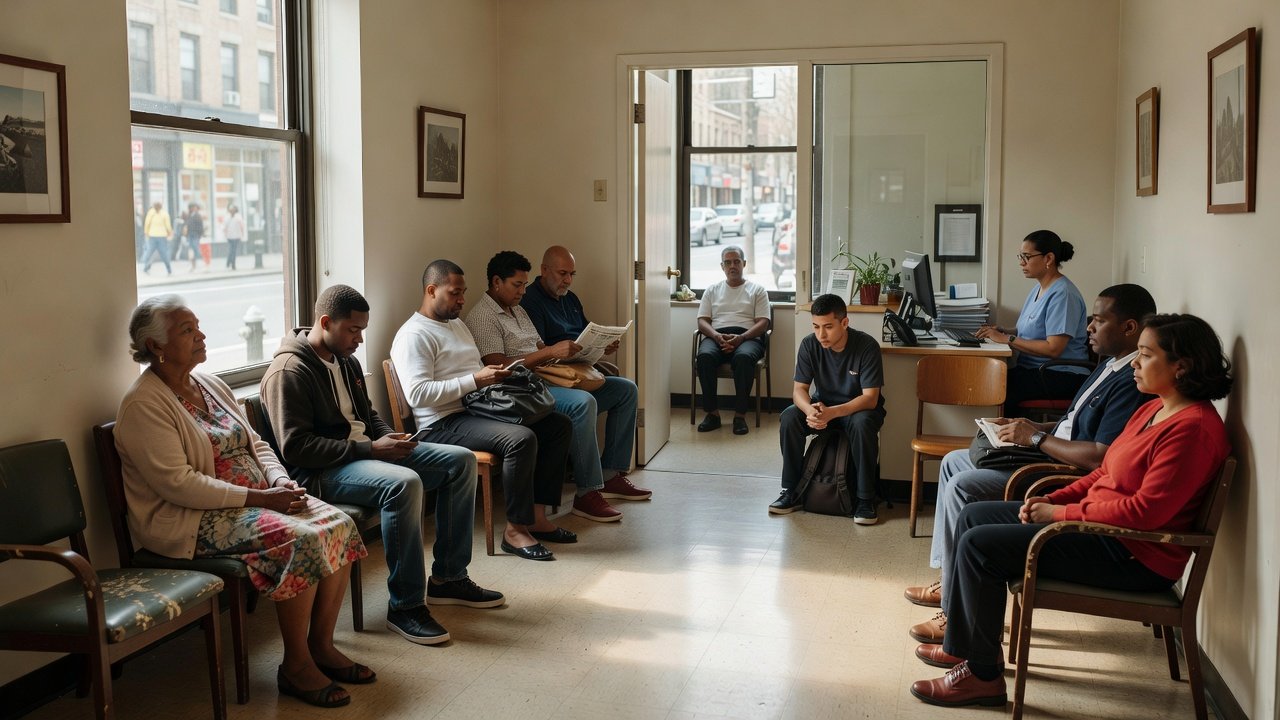
Her situation is not unusual. The Bronx has one of the highest concentrations of Medicaid-insured residents in New York State, and those residents’ families in Co-op City, seniors in Highbridge, young adults in Mott Haven are actively searching online for providers who accept their insurance, speak their language, and are close to transit. If a practice is not showing up in those searches, it does not exist to those patients. That is the honest starting point for any conversation about medical marketing in this borough.
The Misconceptions That Quietly Stall Bronx Medical Practices
The first thing many providers get wrong is assuming that marketing is primarily about advertising spend. We hear this framed as, “We don’t have a budget for ads.” But the most foundational work claiming and optimizing a Google Business Profile, collecting and responding to patient reviews, ensuring that your practice name, address, and phone number are consistent across every online directory costs nothing except time. These are the signals that determine whether Google shows your Tremont Avenue office to someone searching “primary care near me” from their phone on the 6 train. Paid advertising builds on top of this foundation; it does not replace it. Practices that skip the foundation and go straight to ad spend often wonder why their campaigns underperform.
Another persistent misconception is that HIPAA compliance makes meaningful online communication impossible. Providers tell us they avoid posting anything clinical because they are afraid of violating patient privacy rules. That caution is reasonable, but it often goes too far. A pediatric clinic in Pelham Bay is fully allowed to post about flu shot availability, explain what to expect during a well-child visit, or share general information about managing asthma in winter. None of that involves patient data. What HIPAA governs is identifiable patient health information not educational content about conditions you treat or services you offer. Conflating the two results in practices that are completely invisible online, which serves no one.
A third misconception we encounter regularly is the belief that online reviews are something that happen to a practice, not something a practice can shape. This is incorrect, and it matters enormously. According to the New Jersey Department of Human Services, NJ FamilyCare covers home health services for eligible low-income residents, but that principle of access only works if residents can find and trust the providers they need. The same logic applies in New York: patients across the Bronx, Elizabeth, and Newark are using review scores as a proxy for trust before they ever call an office. A practice with forty reviews averaging 4.2 stars will consistently outperform a practice with six reviews and a 4.8 average, simply because volume signals longevity and reliability. The fix is not complicated it is a consistent, compliant process for asking satisfied patients to share their experience online.
Fourth, many practice owners assume that because their patients are lower-income or predominantly Medicaid-insured, digital marketing is less relevant to them. This is one of the most damaging assumptions in the field. Smartphone penetration in communities like Mott Haven and Highbridge is high. Medicaid-eligible families search for providers, read reviews, and check hours on their phones the same way everyone else does. The Genworth 2024 Cost of Care Survey estimates the median annual cost of a home health aide in New Jersey at approximately $61,776, compared to over $120,000 for a private nursing home room — and this cost differential is precisely why Medicaid-insured families are motivated, active searchers looking for community-based care options. Dismissing digital outreach because of a patient population’s income level is both incorrect and, frankly, a missed opportunity to serve the community more fully.
Fifth, there is a widespread assumption that a practice website is a one-time project. Build it, launch it, done. In reality, a static website built in 2020 with no updates, no new content, and no mobile optimization is actively hurting a practice’s search visibility today. Google’s algorithms reward fresh, relevant, location-specific content. A practice in Kingsbridge that publishes a short, honest article about what to expect when applying for home care services under New York Medicaid will rank for searches that a competitor with a prettier but static site will never see. New York State’s Consumer Directed Personal Assistance Program (CDPAP) allows eligible Medicaid recipients to hire and direct their own caregivers including certain family members who are compensated through the Medicaid program, according to the New York State Department of Health. A practice that serves patients navigating CDPAP and writes clearly about that experience becomes a search result and a trusted resource. That is what living content does for a practice.
Finally, a misconception worth addressing directly: marketing for a medical practice is something that can be handed off entirely and forgotten. We understand the impulse physicians are busy, administrative staff are stretched, and outsourcing sounds like relief. But the most effective medical marketing we have helped build in communities from the South Bronx to Jersey City to Crown Heights in Brooklyn works because someone inside the practice stays engaged. That means approving content before it goes out, flagging when services change or hours shift, and occasionally recording a short, unscripted video explaining something patients commonly ask about. The agency does the heavy lifting, but the practice provides the authenticity that no outside team can manufacture.
What Honest Expectations Look Like From the Start
When we begin working with a Bronx medical practice, the first ninety days are almost never about generating new patients. They are about fixing what is broken: the outdated directory listings, the unverified Google profile, the website that loads in seven seconds on mobile, the complete absence of recent reviews. This phase feels invisible to most practice owners, which is why so many give up on marketing before it has had a chance to work. The Centers for Medicare and Medicaid Services reports that Medicaid is the largest single payer for long-term services and supports in the United States, covering roughly 53% of all long-term care spending nationally. That means the patient population most Bronx practices serve is enormous and enormously underserved by providers who are simply not findable online. Getting found is a process, not an event.
Growth comes after the foundation is stable. It comes from content that answers real questions, from Google Maps visibility built over months of consistent signals, from a review count that grows because the front desk team has a simple script and a QR code on the checkout counter. We have watched practices in Parkchester and East Tremont go from essentially invisible online to consistently appearing in the top three local results within six months of disciplined foundational work. That is not magic. It is the result of understanding what the job actually involves and doing it without shortcuts.
If your practice is somewhere in the Bronx and you are not sure whether your current online presence is helping or hurting you, our team at Chauncey Agency is glad to take a look. We work with providers across Brooklyn, the Bronx, Queens, Newark, and Paterson, and we offer a no-pressure initial conversation. Reach out through chauncey.agency and let us show you what we are actually seeing when we look at your practice online.
Frequently Asked Questions
Honest answer: the first two to three months are foundational fixing directory listings, verifying your Google Business Profile, and making sure your website loads correctly on mobile. Most Bronx practices we work with begin seeing measurable increases in new patient inquiries between months four and six. Paid search can accelerate this, but it works best on top of a clean organic foundation. Anyone promising significant results in thirty days is overselling.
Yes. HIPAA restricts the use of identifiable patient health information, not general educational content. A Bronx family practice can post about seasonal health topics, explain how to navigate Medicaid enrollment, describe what a new patient visit involves, and share community health resources all without touching protected patient data. The key is to never reference specific patients, even indirectly, without written authorization. Working with a marketing partner who understands healthcare compliance helps you stay on the right side of that line.
Absolutely, and the assumption that Medicaid-insured patients do not search online is one of the most persistent and costly myths in this field. Residents across Co-op City, Mott Haven, and Soundview use smartphones to find doctors, check reviews, and confirm insurance acceptance before they call. If your practice is not visible in those searches, you are not competing for those patients — a nearby group practice or urgent care chain is. Foundational digital marketing does not require a large budget; it requires consistency and local specificity.
Strengthen Your Bronx Medical Practice Marketing
If your practice is struggling to get found online, outdated listings, limited reviews, or an underperforming website may be holding you back. A focused digital marketing strategy can help improve your local visibility and make it easier for prospective patients to find the care you provide.
Chauncey Agency works with medical practices across the Bronx, Brooklyn, Queens, Newark, and Paterson. Our team can review your current online presence, identify areas that need attention, and explain practical next steps without unnecessary pressure.
Visit chauncey.agency to schedule a no-pressure conversation and see what we find when we look at your practice online.
Related from Chauncey Agency: Medicaid Home Care In Brooklyn, NY · Medicaid Therapy in Brooklyn, NY · And Genuinely Care
What we do
Expert Consulting Services in Carroll Gardens · Consulting Services in Greenwood Heights, Brooklyn · Consulting Services in Downtown Brooklyn · Consulting Services in Ditmas Park, Brooklyn · Consulting Services in Fort Greene, Brooklyn
From the blog
The Rise of AI · Why Businesses Need a Digital Marketing Strategy · 10 Essential Search Engine Optimization Tips for Small … · Top 5 Social Media Marketing Trends You Can't Ignore · How to Harness Social Media Ecommerce for Better Online… · The 6 Best Ecommerce Platforms for Small Businesses in …